
HDR gaming is playing games on a high dynamic range display that widens the range of brightness and color beyond standard dynamic range, so the image shows brighter highlights, deeper shadows, and a wider palette at the same time. A standard display has to choose: either keep detail in the sunlit sky or in the shadows under a tree, but not both. HDR keeps both by reaching far higher peak brightness, measured in nits, and a wider color gamut. The catch is that the effect only appears on a panel built for it. A cheap monitor labeled HDR but limited to 400 nits with no local dimming looks almost identical to a standard one, which is why the badge alone does not guarantee real HDR.
What Is HDR Gaming?
HDR gaming is playing games on a high dynamic range display that expands brightness and color beyond standard dynamic range, showing brighter highlights, darker shadows, and more colors together in one frame. Standard dynamic range, the older default, tops out around 100 to 300 nits and a narrow color range, so it has to clip bright areas to white or crush dark areas to black. High dynamic range widens that window. It improves the image in three ways:
- The contrast range expands, so a bright highlight and a deep shadow can sit in the same frame without one washing out the other.
- The color volume increases through a wide color gamut, showing more saturated and varied colors than standard dynamic range can.
- The highlight detail survives in bright areas such as sunlight, fire, and explosions, where standard dynamic range would clip everything to flat white.
HDR gaming depends on a display actually built for high dynamic range, because the panel has to reach the brightness and color the standard calls for. The panel features that decide this are part of the full display picture in gaming monitor specs explained, and the choice of screen sits inside the wider question of what a gaming monitor is.
How Does HDR Work in Games?
HDR works in games by encoding a wider range of brightness and color in the game’s output, then showing it on a panel that reaches high peak brightness and uses local dimming or self-lit pixels to control the dark areas. The game renders a high dynamic range signal, and the display reproduces it. Three mechanisms do the work:

- Peak brightness measured in nits sets how bright a highlight can get. Useful HDR reaches 600 nits or more, and the strongest effect comes from panels at 1,000 nits and above.
- The wide color gamut covers more of the DCI-P3 color space than standard dynamic range, which targets the narrower sRGB space, so colors look more saturated.
- Local dimming splits an LCD backlight into zones, or on OLED switches off pixels entirely, deepening shadows while keeping nearby highlights bright.
The number of dimming zones, or per-pixel control on OLED, is what separates entry-level HDR from the real thing. Watch one detail in the specs: a monitor often hits its quoted peak only on a small bright patch and falls to a few hundred nits across a full bright scene, so the headline nit figure can flatter a panel. This and the rest of the panel numbers are unpacked in gaming monitor specs explained.
What Are the HDR Formats?
The main HDR formats are HDR10, HDR10+, and Dolby Vision, and they differ mainly in their metadata, the instructions that tell the display how to map brightness. Static metadata sets one map for the whole game; dynamic metadata adjusts it scene by scene. Here is how the three compare:
Alongside these content formats sit the VESA DisplayHDR tiers, which certify the display itself rather than the signal. The next section covers what those tiers actually promise.
What Do the VESA DisplayHDR Tiers Mean?
VESA DisplayHDR is a certification that grades a display by its peak brightness and contrast ability, so the tier number tells you how strong the HDR effect can actually be. The standard LCD tiers run by brightness, while OLED panels get separate True Black tiers that measure how deep their blacks go. The table below shows what each common tier delivers:
| DisplayHDR tier | Peak brightness | What it means for gaming |
|---|---|---|
| DisplayHDR 400 | 400 nits | Entry level, no local dimming required. Looks close to SDR; often best left off. |
| DisplayHDR 600 | 600 nits | The realistic starting point for a visible HDR effect, with some local dimming. |
| DisplayHDR 1000 | 1,000 nits | Strong HDR on LCD, paired with many local dimming zones (often Mini-LED). |
| DisplayHDR 1400 | 1,400 nits | The brightest LCD tier, for the most demanding highlights. |
| True Black 400 to 600 | 400 to 600 nits | OLED tiers; lower peak nits but near-perfect blacks for the best contrast. |
The takeaway is that a higher LCD tier means more brightness and better dimming, while a True Black tier trades raw brightness for the deep blacks only an OLED can hit. Matching a tier to the rest of a panel’s numbers is covered in gaming monitor specs explained.



Why Do Cheap HDR Monitors Disappoint?
Cheap HDR monitors disappoint because the HDR label can be earned with only 400 nits and no local dimming, which is not enough hardware to produce the bright highlights and deep blacks that define high dynamic range. The badge says HDR; the panel cannot deliver it. The common letdowns are:
- No local dimming. DisplayHDR 400 does not require any dimming zones, so the whole backlight brightens or dims as one. There is no way to keep a highlight bright while the shadows stay dark.
- Low real brightness. 400 nits is close to a good SDR monitor, so highlights have nowhere brighter to go.
- Worse, not better. Turning HDR on can make the picture look flat or washed out, because the system tone-maps for a panel that cannot reach the contrast it is being asked for.
- Too few zones on cheap Mini-LED. Even some mid-range LCDs disappoint when they have too few dimming zones, letting bright objects glow into the dark area around them.
What Do You Need for HDR Gaming?
HDR gaming needs three things together: an HDR-capable display, a game or source that outputs an HDR signal, and the system set to send high dynamic range. Every link in that chain has to support HDR, because one missing piece drops the image back to standard dynamic range. The requirements are:
- The HDR display must reach the brightness and color the standard defines, ideally DisplayHDR 600 or higher, or an OLED.
- The HDR content must come from a game that renders an HDR signal, or from a feature that converts standard games to HDR.
- The system setting must enable HDR output, such as the Windows HDR toggle or the console’s HDR display option.
- The right cable and port, HDMI 2.1 or DisplayPort with enough bandwidth, are needed for HDR at 4K and a high refresh rate.
One feature fills the content gap. Windows Auto HDR, on Windows 11 and the Xbox Series consoles, upgrades many DirectX 11 and DirectX 12 games from SDR to HDR in real time, so you get an HDR image even from games with no native HDR mode. HDR pairs naturally with sharp detail, which is why it is often discussed next to 4K gaming.
What Is the Difference Between HDR and SDR?
The difference between HDR and SDR is that high dynamic range expands brightness and color beyond the limits of standard dynamic range, showing brighter highlights, deeper shadows, and more colors that SDR cannot reproduce. SDR targets a lower peak brightness and a narrower color gamut; HDR raises both. They differ in three ways:
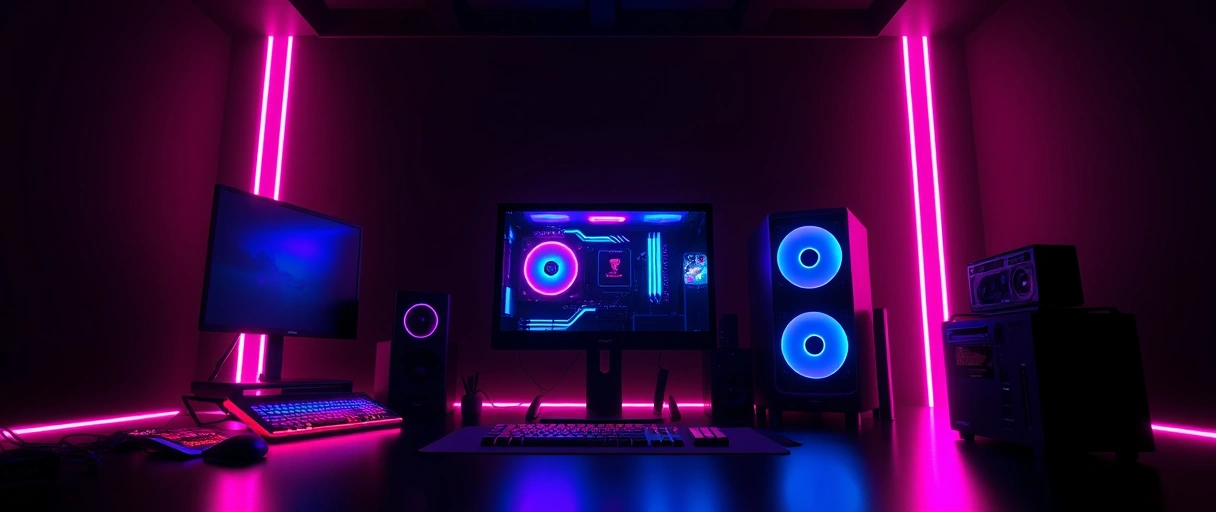
- Peak brightness differs because HDR reaches 600 to over 1,000 nits while SDR targets around 100 to 300 nits.
- The color gamut differs because HDR covers the wide DCI-P3 range while SDR targets the narrower sRGB space.
- Contrast differs because HDR preserves detail in bright and dark areas together while SDR clips highlights or crushes shadows.
| Attribute | HDR (High Dynamic Range) | SDR (Standard Dynamic Range) |
|---|---|---|
| Peak brightness | 600 to 1,000+ nits | About 100 to 300 nits |
| Color gamut | Wide, DCI-P3 | Narrow, sRGB |
| Contrast | Highlights and shadows together | Clips highlights or shadows |
| Metadata | Static or dynamic | None |
The HDR benefit is largest on displays that reach high peak brightness and use precise local dimming or per-pixel OLED control, while low-tier HDR looks much like standard dynamic range. HDR is one upgrade to the gaming image; resolution is another, covered in 4K gaming.
Does HDR Gaming Affect Performance?
HDR gaming has little effect on frame rate, because high dynamic range changes how the display reproduces brightness and color, not how many pixels the graphics card renders. Enabling HDR adds minimal rendering cost, so the frame rate stays close to the SDR result. The few effects to know are:
- The frame-rate impact stays small, since HDR adjusts output values rather than adding pixels or geometry to render.
- The bandwidth demand rises slightly, since HDR sends more color data per pixel, which matters most at high resolution and refresh rate.
- The cable and port requirement increases, since HDR at 4K and a high refresh rate needs HDMI 2.1 or DisplayPort with enough bandwidth.
That extra bandwidth is the main practical consideration, and it grows when HDR runs at 4K alongside a high refresh rate. The resolution side of the demand is covered in 4K gaming, which sits with HDR inside the broader PC gaming guide.
Last Thoughts on HDR Gaming
HDR gaming widens the brightness and color of the game image beyond standard dynamic range, so highlights get brighter, shadows get deeper, and both keep their detail in the same frame. That effect is real, but it lives in the hardware, not the label. It comes from high peak brightness, a wide color gamut, and either many local dimming zones on an LCD or per-pixel control on an OLED. The formats from HDR10 to Dolby Vision define the signal, and the VESA DisplayHDR tiers tell you how much of it a screen can actually show.
The practical rule is simple: ignore DisplayHDR 400, aim for DisplayHDR 600 or higher or an OLED, and check the real full-screen brightness rather than the peak headline. HDR is one piece of a good gaming display alongside resolution and refresh rate, all connected in the PC gaming guide hub.
Key Takeaways:
- HDR gaming expands brightness and color beyond SDR, showing brighter highlights and deeper shadows together.
- The effect needs real hardware: high peak brightness plus local dimming on LCD, or per-pixel control on OLED.
- DisplayHDR 400 requires no local dimming and barely qualifies as HDR; aim for DisplayHDR 600 or higher, or an OLED.
- HDR10 is the open baseline; HDR10+ and Dolby Vision add dynamic, scene-by-scene metadata.
- Check real full-screen brightness, since many panels hit their peak only on a small bright patch.
- HDR barely affects frame rate, but HDR at 4K and high refresh rate needs HDMI 2.1 or DisplayPort bandwidth.
Frequently Asked Questions (FAQs)
What is HDR gaming in simple terms?
HDR gaming is playing on a display that supports high dynamic range, which widens the gap between the brightest and darkest parts of the image and shows more colors. The result is brighter highlights, deeper shadows, and detail in both at the same time, where a standard display would blow out the bright areas or crush the dark ones.
Is DisplayHDR 400 real HDR?
Barely. DisplayHDR 400 requires only 400 nits of peak brightness and no local dimming at all, so it cannot produce the bright highlights or deep blacks that make HDR look different. On many of these monitors, turning HDR on makes the image look worse. A real HDR effect starts around DisplayHDR 600 and is clearest at DisplayHDR 1000 with local dimming or on an OLED.
What is the difference between HDR10, HDR10+, and Dolby Vision?
HDR10 is the free, open baseline and uses static metadata, one brightness map for the whole game. HDR10+ and Dolby Vision add dynamic metadata that adjusts scene by scene for better highlight and shadow detail. Dolby Vision is a licensed standard supported on Xbox; the PlayStation 5 caps at HDR10. On PC, HDR10 is the default path.
How many nits do you need for good HDR?
Aim for at least 600 nits of peak brightness, with 1,000 nits or more giving the strongest effect on an LCD. Watch the small print: many monitors hit their peak only on a small bright patch and drop to 250 to 400 nits across a full bright scene, so the headline number rarely tells the whole story.
Why does HDR look better on OLED?
An OLED lights each pixel on its own, so it can show a true 0-nit black right next to a bright highlight with no halo. An LCD shares one backlight split into dimming zones, and with too few zones a bright object glows into the dark area around it. That per-pixel control is why VESA gives OLED its own DisplayHDR True Black tiers.
Does HDR gaming lower your frame rate?
No, the frame-rate cost is minimal because HDR changes the brightness and color values sent to the display, not the number of pixels the graphics card draws. The one thing to plan for is connection bandwidth: HDR at 4K and a high refresh rate needs HDMI 2.1 or DisplayPort with enough headroom.
About the author

Nizam Ud DeenFounder and Tech Blogger
Muhammad Nizam Ud Deen Usman is the founder of theCoreiTech and the author of The Local SEO Cosmos. He has worked in search since 2014 as an SEO consultant for eCommerce stores and local businesses, specialising in eCommerce SEO, local SEO and technical SEO, and runs SEO Academy and the SEO Community from Multan, Pakistan. He also founded ORM Digital Solutions, a digital agency serving medium and large businesses, and holds a degree from the University of Education, Lahore (Multan Campus). Plerdy lists him among its Best 20+ SEO Experts in Pakistan. Nizam started theCoreiTech in 2012 to make computers easier to understand and use for everyone. More of his work is at nizamuddeen.com.
