
Start by trying the mouse in a different USB port, and on a wireless mouse, replace or recharge the batteries and reseat the receiver, because a loose connection or drained power causes most failures. A wired mouse needs a working port and cable, while a wireless mouse needs fresh power and an intact pairing. If the basics check out, the fault is usually a corrupted driver, a dirty sensor, an unsuitable surface, USB power management, or, on a laptop, a touchpad that Windows has switched off. Apply the fixes in order and test the cursor and clicks after each one.
Why Is My Mouse Not Working?
A mouse stops working when the movement or click signal cannot reach Windows, either because the connection fails, the sensor cannot track, or software blocks the input. The four groups below cover almost every case, ordered from most to least common.
A worn micro-switch and an aggressive double-click speed are separate faults that show as a single press registering twice. The internal parts that generate the movement signal are described in the guide to how computer mice work.
How Do You Fix a Mouse That Is Not Working?
Work through the fixes in order and test cursor movement and clicks after each one, because a single connection, battery, driver, sensor, or touchpad fault usually accounts for the failure.
- Try another USB port. Move the mouse to a different port directly on the computer, not a hub. On a desktop, use a rear port, because it connects straight to the motherboard. Test the mouse on a second computer to confirm whether the mouse or the port is at fault.
- Check the batteries and re-pair. Replace the batteries or charge the mouse, confirm the underside switch is on, and reseat the 2.4GHz receiver in a nearby port. For Bluetooth, open Settings, select Bluetooth and devices, remove the mouse, then add it again.
- Try a different surface. Turn the mouse over, blow compressed air across the sensor lens, and wipe it with a dry lint-free cloth. Move to an opaque mouse pad instead of glass or a glossy desk, which an optical sensor cannot read.
- Update or reinstall the driver. Press the Windows key and X, open Device Manager, expand Mice and other pointing devices, right-click the mouse, and select Uninstall device. Restart, and Windows reinstalls a standard driver. If it still fails, choose Update driver instead.
- Re-enable the touchpad on a laptop. Windows can switch the touchpad off, sometimes when an external mouse is connected. Unplug the mouse to test, or press the Fn key with the function key that shows a touchpad icon. On some laptops the touchpad is re-enabled in Settings, under Bluetooth and devices, then Touchpad.
- Disable USB power management. Open Control Panel, Hardware and Sound, Power Options, Change plan settings, then Change advanced power settings. Expand USB settings and set USB selective suspend to Disabled for both On battery and Plugged in, then restart.
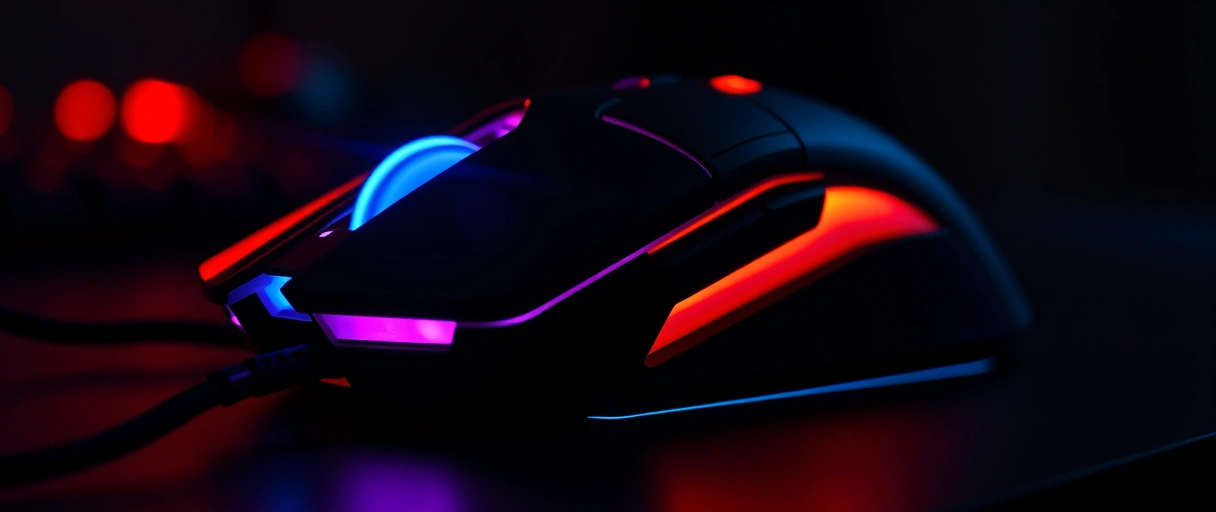
An optical sensor fails on glass and mirrored surfaces, while a laser sensor tracks on more materials but still skips on clear glass. A fabric or hard plastic pad gives the sensor consistent texture to read. The differences between USB port generations are covered in the guide to types of computer ports, and the trade-offs between connection types in the comparison of wired and wireless peripherals.
A mouse that freezes after the computer is idle and recovers only after several movements points directly to USB selective suspend, because the setting cuts power to the port and the mouse has to wake it back up. Disabling it keeps power flowing to the port at all times.
How Do You Fix a Mouse That Double-Clicks or Jitters?
Adjust the click and pointer settings first, then treat a persistent double-click as a worn switch. A degraded micro-switch and an aggressive double-click speed both produce false clicks, while jitter usually traces back to the sensor or surface.
- Open Control Panel, select Mouse, and lower the Double-click speed slider on the Buttons tab to cut accidental double-clicks.
- Update the mouse firmware through the manufacturer software, because some makers ship a debounce fix.
- Test the mouse on a second computer. If the double-click follows the hardware, the switch is worn and needs repair or replacement.
- For jitter, clean the sensor and confirm the surface, because a dirty lens or a reflective desk makes the cursor drift.
- On the Pointer Options tab, set the pointer speed to the middle and clear Enhance pointer precision to stop variable acceleration on a gaming mouse.
A high-DPI gaming mouse stores its sensitivity in onboard memory, so the pointer speed is set in both Windows and the manufacturer software for consistent movement.
How Do You Restore the Extra Buttons on a Gaming Mouse?
Install the manufacturer software, because a standard Windows driver does not control the extra buttons, DPI stages, or lighting on a gaming mouse.

- Install the maker software. Use Logitech G HUB, Razer Synapse, Corsair iCUE, or the matching application for the mouse brand.
- Update the mouse firmware. Apply any firmware update the software offers, because it can fix tracking and button faults.
- Reassign the extra buttons. Map the side and DPI buttons in the software when they stop responding.
- Save settings to onboard memory. Store the configuration on the mouse so it works without the software running.
Mouse Symptoms and Their Causes
| Symptom | Most Likely Cause | First Fix to Try |
|---|---|---|
| Cursor does not move on a wired mouse | Loose cable or faulty USB port | Try another port or computer |
| Cursor does not move on a wireless mouse | Dead batteries or dropped pairing | Replace batteries and re-pair |
| Cursor jumps or drifts erratically | Dirty sensor or unsuitable surface | Clean the sensor, use an opaque pad |
| Mouse freezes after the PC is idle | USB selective suspend | Disable USB selective suspend |
| Touchpad dead on a laptop | Touchpad switched off in Windows | Press the Fn touchpad key, unplug the mouse |
| A single click registers as a double-click | Worn micro-switch | Lower click speed, replace the switch |
| Side buttons or DPI stages do not work | Missing manufacturer software | Install the maker software |
Last Thoughts on a Mouse That Is Not Working
A mouse not working is resolved by checking the connection or batteries first, then moving through the surface, driver, touchpad, and power checks in order. A wired mouse depends on a working USB port and cable, a wireless mouse depends on fresh batteries and an intact pairing, and any mouse depends on a clean sensor and an opaque surface. When the pointer is gone entirely, the keyboard can carry you to every setting that fixes it.
When the mouse is one of several dead input devices, the steps to fix a keyboard that is not working, to resolve a USB device not recognized, and to repair a webcam that is not working all apply to the shared connection. A full index of input faults sits in the hub of common PC problems.
Key Takeaways:
- Try a different USB port first on a wired mouse, and replace the batteries and reseat the receiver first on a wireless mouse.
- Re-pair a Bluetooth mouse by removing it in Settings under Bluetooth and devices, then adding it again.
- Clean the sensor and use an opaque pad, because optical sensors cannot track on glass or a glossy desk.
- Uninstall the mouse in Device Manager and restart to replace a corrupted driver, or choose Update driver if it still fails.
- On a laptop, re-enable the touchpad with the Fn touchpad key, and unplug the external mouse that may have switched it off.
- Disable USB selective suspend when the mouse freezes after the computer sits idle, and use Mouse Keys to navigate when no pointer works at all.
Frequently Asked Questions (FAQs)
Why is my mouse not working all of a sudden?
A mouse that stops suddenly usually has a loose USB connection, dead wireless batteries, or a power-saving dropout. Try a different USB port, replace the batteries or recharge the mouse, and disable USB selective suspend in the power options.
How do I fix a wireless mouse that has stopped responding?
Replace the batteries or charge the mouse, confirm the power switch is on, and reseat the USB receiver in a port close to the mouse. For a Bluetooth mouse, remove it in Windows Settings under Bluetooth and devices, then add it again to force a fresh pairing.
How do I use my computer when the mouse is dead?
Use the keyboard alone. Press Tab and Shift plus Tab to move between controls, arrow keys to move inside a list or menu, Enter or Spacebar to select, and Shift plus F10 for the right-click menu. To move the cursor with the number pad, press Left Alt plus Left Shift plus Num Lock to turn on Mouse Keys.
Why does my laptop touchpad stop working when I plug in a mouse?
Windows 11 can turn the touchpad off automatically while an external mouse is connected. Unplug the mouse or remove its receiver to test the touchpad, or press the Fn key with the function key that shows a touchpad icon to re-enable it. Some laptops re-enable the touchpad in Settings under Bluetooth and devices, then Touchpad.
Why does my mouse cursor jump around or drift?
A jumping cursor comes from a dirty sensor or an unsuitable surface. Clean the optical or laser lens with compressed air and a dry cloth, then use an opaque mouse pad instead of glass or a glossy desk, because a transparent surface gives the sensor nothing to track.
Why does my mouse freeze for a few seconds when idle?
A mouse that freezes after the computer sits idle is being suspended by USB selective suspend. Open Power Options, expand USB settings, and set USB selective suspend to Disabled for both On battery and Plugged in, then restart.
About the author

Nizam Ud DeenFounder and Tech Blogger
Muhammad Nizam Ud Deen Usman is the founder of theCoreiTech and the author of The Local SEO Cosmos. He has worked in search since 2014 as an SEO consultant for eCommerce stores and local businesses, specialising in eCommerce SEO, local SEO and technical SEO, and runs SEO Academy and the SEO Community from Multan, Pakistan. He also founded ORM Digital Solutions, a digital agency serving medium and large businesses, and holds a degree from the University of Education, Lahore (Multan Campus). Plerdy lists him among its Best 20+ SEO Experts in Pakistan. Nizam started theCoreiTech in 2012 to make computers easier to understand and use for everyone. More of his work is at nizamuddeen.com.
