
VR (virtual reality) replaces your entire view with a computer-generated world through an enclosed headset, while AR (augmented reality) overlays digital content on the real world you still see through glasses or a phone camera. VR shuts out your surroundings and puts you somewhere else; AR keeps your surroundings and adds to them. Mixed reality (MR) sits between the two, anchoring virtual objects to your real room, and modern headsets reach it through passthrough cameras. The three together are called XR, or extended reality.
What Is the Difference Between VR and AR?
The difference between VR and AR is that virtual reality replaces your view with a fully computer-generated environment, while augmented reality overlays digital content on the real world you still see. VR blocks out the physical surroundings; AR keeps them visible and adds graphics on top. The two differ in three core ways:
- The view: VR fills the entire field of view with a rendered scene, while AR keeps the real world in sight and layers content over it.
- The immersion: VR places you inside a virtual space, while AR keeps you in the physical space you already occupy.
- The device: VR uses an enclosed headset, while AR uses transparent glasses or a phone camera.
VR and AR sit at two ends of a range, with mixed reality bridging them. The immersive VR side of this comparison is detailed in the explanation of VR gaming.
VR vs AR vs MR at a Glance
The cleanest way to hold the three apart is by how much of the real world each one lets you keep. VR removes it, AR keeps it and adds to it, and MR keeps it and lets virtual objects interact with it.
These three, plus future variations, are grouped under the umbrella term XR (extended reality). They map onto the reality-to-virtuality continuum first described by Milgram and Kishino in 1994, from the fully real world at one end to a fully virtual one at the other.
What Is Virtual Reality?
Virtual reality is a technology that replaces your entire field of view with a computer-generated 3D environment displayed through an enclosed headset. VR renders a separate image per eye and tracks head motion, so the rendered world responds to where you look while the physical surroundings stay hidden. It has three defining traits:
- Full replacement: the real world is blocked entirely, presenting only the rendered environment.
- Stereoscopic display: two offset images produce depth, creating the sense of standing inside the scene.
- Head and hand tracking: the view updates with your head, and controllers or hand tracking map your hands into the world for interaction.
VR suits applications where total immersion matters, such as gaming, simulation, and training. Its standout consumer success is rhythm play like Beat Saber, which has sold several million copies. The hardware behind it is covered in the explanation of VR gaming, and the panels inside the headset relate to monitor panel types.
What Is Augmented Reality?
Augmented reality is a technology that overlays digital content on the real world, shown through transparent glasses or a device camera, so you see physical surroundings and virtual elements at the same time. AR keeps the real environment visible and places graphics, text, or objects on top of it, anchored to real positions. It has three defining traits:
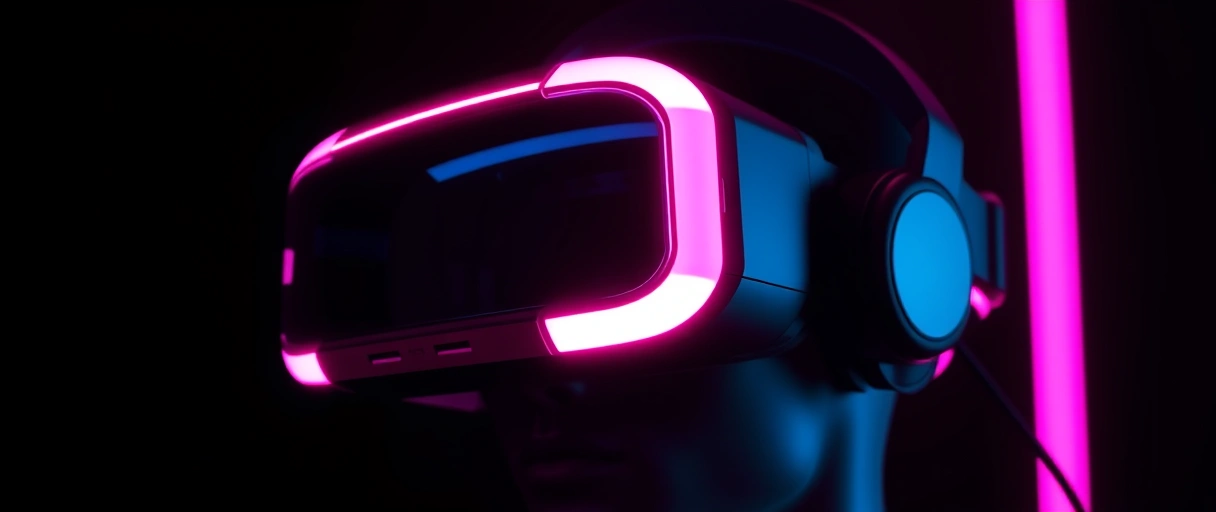
- The overlay: digital content is added on top of the real world rather than replacing it, keeping the physical view in place.
- Environment awareness: cameras and sensors detect surfaces and positions so virtual content aligns with real objects.
- The display path: the real world reaches your eyes through transparent optics or a camera feed combined with rendered graphics.
AR runs on devices ranging from smartphones to dedicated glasses. In 2026 the Meta Ray-Ban Display glasses put a small full-color display in the right lens for messages, turn-by-turn navigation, live captions, and a camera viewfinder, while Pokemon GO remains the mass-market example of phone-based AR. The narrow field of view on glasses is the trade-off for a lightweight, everyday form factor.



What Is Mixed Reality and Passthrough?
Mixed reality blends virtual and real content by anchoring computer-generated objects to physical spaces, so virtual objects rest on real surfaces and stay put as you move. MR combines the immersion of VR with the real-world awareness of AR. Passthrough is the technique that makes it work on a closed headset: outward-facing color cameras capture your room and feed it to the displays, then virtual objects are rendered on top. It has three defining traits:
- Spatial anchoring: virtual objects are fixed to real positions, so they stay in place as you walk around the room.
- Environment mapping: the headset scans the space so virtual content can rest on tables, walls, and floors.
- Passthrough immersion: cameras show the real world while rendered objects appear to share it, and you can switch back to full VR.
What Devices Use VR and AR?
VR uses enclosed headsets such as the Meta Quest 3, Valve Index, and PlayStation VR2, while AR uses smart glasses such as the Meta Ray-Ban Display and smartphones running AR software. The device type follows the technology, since VR needs an enclosed display and AR needs a transparent or pass-through view. The devices for each are listed below:
- VR headsets from Meta, Valve, and Sony enclose the eyes to present a fully rendered environment.
- AR smart glasses such as the Meta Ray-Ban Display use a lens-mounted display, while the Microsoft HoloLens used transparent waveguides for enterprise work.
- Smartphone AR runs on phones and tablets, using the camera and screen to place virtual objects in a real scene.
- Mixed reality headsets such as the Apple Vision Pro and Meta Quest 3 combine color passthrough cameras with rendered content.
Smartphone AR reaches the widest audience because the device already exists in most people’s hands, while the dedicated headsets for VR are detailed in the explanation of VR gaming.
What Are the Use Cases for VR and AR?
VR serves gaming, simulation, and immersive training where total immersion matters, while AR serves navigation, productivity, and field work where digital information must sit alongside the real world. The use case follows the strength of each technology. The main ones are listed below:
- VR gaming and fitness place you inside a virtual world for immersive play and movement-based workouts, as with Beat Saber and Supernatural.
- AR navigation and productivity overlay directions, data, and instructions on the real world for drivers, field technicians, and warehouse staff.
- VR training recreates hazardous or expensive scenarios safely, such as flight, equipment operation, and emergency response.
- AR retail and everyday assistance place virtual furniture in real rooms before purchase and surface messages, captions, and translations on smart glasses.
VR dominates immersive entertainment, while AR dominates tasks that keep you grounded in the physical environment. The gaming applications of VR are detailed in the explanation of VR gaming, and where the medium is going next is covered in the future of PC gaming.
What Are the Hardware Differences Between VR and AR?
VR hardware uses enclosed displays, lenses, and head tracking to block the real world, while AR hardware uses transparent optics or camera passthrough, depth sensors, and environment mapping to blend digital content with reality. The hardware reflects the goal: VR replaces vision and AR augments it. The differences are listed below:
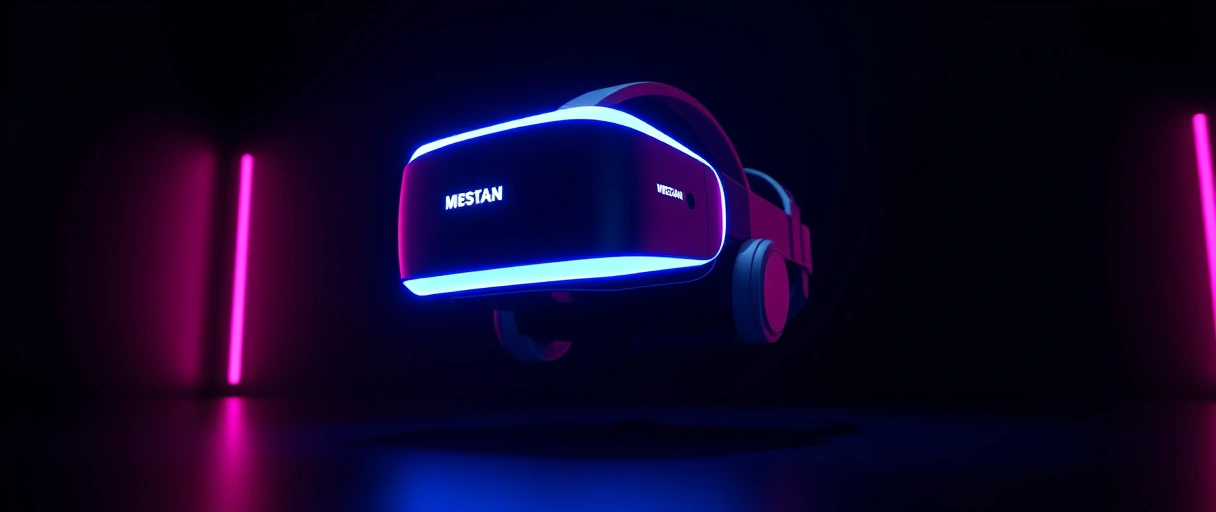
- The display type differs because VR uses opaque per-eye panels while AR uses transparent waveguides or a camera-fed screen.
- The sensors differ because AR and passthrough MR add depth sensors and environment-mapping cameras to align virtual content with real surfaces.
- The field of view differs because VR fills your vision while many AR glasses present content in a smaller central area, often around 20 degrees.
- The processing differs because both render graphics, but AR and passthrough also process a live view of the real world in real time.
| Dimension | Virtual Reality (VR) | Augmented Reality (AR) |
|---|---|---|
| View | Fully replaced by rendered scene | Real world with digital overlay |
| Display | Opaque per-eye panels | Transparent optics or camera feed |
| Immersion | Full, blocks surroundings | Partial, keeps surroundings |
| Real-world awareness | None by default (added via passthrough) | Core to how it works |
| Typical device | Enclosed headset (Quest 3, Valve Index, PSVR2) | Smart glasses or smartphone |
| Field of view | Wide, around 90 to 110 degrees | Narrow on glasses, around 20 to 50 degrees |
| Main use | Gaming, simulation, training | Navigation, productivity, retail |
The hardware demand of VR is higher per scene because the headset renders the entire field of view, while AR renders only the overlay. The graphics hardware that powers VR matches the cards in the guide to the best GPUs for gaming.
What Are the Limitations of VR and AR?
VR is limited by its enclosed headset that blocks the real world and by motion sickness from tracking delay, while AR is limited by a narrow field of view, outdoor brightness, and the processing needed to map the environment in real time. Each technology faces constraints tied to how it presents content. The limitations are listed below:
- VR isolation blocks the real world entirely, requiring a clear play space and limiting awareness of your surroundings.
- VR motion sickness arises when tracking delay causes the view to lag behind head movement, a constraint tied to refresh rate.
- AR field of view often confines digital content to a small central area on glasses, narrowing the overlay region.
- AR brightness falls in sunlight, since transparent optics compete with bright real-world light that washes out the overlay.
- AR processing demands real-time environment mapping, adding computational load to align content with moving surfaces.
VR motion sickness is addressed mainly through higher refresh rates and stable frame rates, as the explanation of VR gaming describes. The refresh-rate factor behind comfortable VR connects to monitor refresh rate, where a higher rate shortens the delay between motion and display.
Last Thoughts on VR vs AR
VR vs AR comes down to one question: how much of the real world do you keep? Virtual reality replaces your view with a rendered environment for total immersion, while augmented reality keeps the real world visible and overlays digital content on it. Mixed reality bridges the two by anchoring virtual objects to your physical space, and passthrough cameras now let a single headset like the Meta Quest 3 or Apple Vision Pro move between them. The hardware for each follows its goal of replacing or augmenting vision.
The whole family of these technologies is grouped under XR, and the direction of travel is toward devices that blend the real and the virtual rather than picking one. Readers can continue with the explanation of VR gaming, the future of PC gaming, or the PC gaming guide hub for the wider set of related concepts.
Key Takeaways:
- VR replaces your entire view with a computer-generated environment shown through an enclosed headset.
- AR overlays digital content on the real world through transparent glasses or a smartphone camera.
- Mixed reality blends both by anchoring virtual objects to real spaces, reached through passthrough cameras.
- XR (extended reality) is the umbrella term covering VR, AR, and MR together.
- VR suits immersive gaming and training; AR suits navigation, productivity, and everyday assistance.
- Headsets like the Meta Quest 3 and Apple Vision Pro now switch between VR and MR on one device.
Frequently Asked Questions (FAQs)
What is the difference between VR and AR?
Virtual reality replaces your entire view with a computer-generated environment shown through an enclosed headset, so the real world disappears. Augmented reality overlays digital content on the real world, which you still see through transparent glasses or a phone camera. VR immerses you in a new place; AR adds to the place you are in.
What is mixed reality and how is it different from AR?
Mixed reality blends virtual and real content so digital objects are anchored to your physical room and react to real surfaces. The difference from basic augmented reality is interaction: AR can simply float a label in view, while MR places an object that sits on your table and stays there as you walk around. Headsets like the Meta Quest 3 and Apple Vision Pro deliver MR through color passthrough cameras.
What is XR?
XR, or extended reality, is the umbrella term that covers virtual reality, augmented reality, and mixed reality together. The three sit on the reality-to-virtuality continuum described by Milgram and Kishino in 1994, ranging from the fully real world to a fully virtual one, with AR and MR in between.
Is VR or AR better for gaming?
Virtual reality is better for deep immersion, placing the player inside the rendered world, as seen in titles like Beat Saber. Augmented reality suits games that blend digital content with your real surroundings, such as Pokemon GO, which uses your phone camera and location. They serve different kinds of play rather than competing directly.
Can one headset do both VR and AR?
Yes. Mixed reality headsets such as the Apple Vision Pro and the Meta Quest 3 use outward-facing color cameras to show the real world, then render virtual objects on top of it. You can switch between full virtual immersion and a passthrough view of your room, often with a single gesture.
Are AR smart glasses available in 2026?
Yes. The Meta Ray-Ban Display glasses put a small full-color display in the right lens for messages, navigation, live captions, and a camera viewfinder. Their field of view is narrow compared with a VR headset, so they show compact information rather than a full immersive scene, which is the trade-off lightweight AR glasses make today.
About the author

Nizam Ud DeenFounder and Tech Blogger
Muhammad Nizam Ud Deen Usman is the founder of theCoreiTech and the author of The Local SEO Cosmos. He has worked in search since 2014 as an SEO consultant for eCommerce stores and local businesses, specialising in eCommerce SEO, local SEO and technical SEO, and runs SEO Academy and the SEO Community from Multan, Pakistan. He also founded ORM Digital Solutions, a digital agency serving medium and large businesses, and holds a degree from the University of Education, Lahore (Multan Campus). Plerdy lists him among its Best 20+ SEO Experts in Pakistan. Nizam started theCoreiTech in 2012 to make computers easier to understand and use for everyone. More of his work is at nizamuddeen.com.
