
The future of PC gaming is the direction the platform is moving, defined by expanding technologies that build on hardware and software shipping today: AI upscaling and frame generation, neural rendering, path tracing going mainstream, handheld gaming PCs, cloud gaming, Windows on ARM, and rising graphics card capability. The defining shift is that AI now produces a growing share of what you see on screen, rather than every pixel being traditionally rendered. These trends extend products already in use from Nvidia, AMD, Intel, Valve, Qualcomm, and Microsoft, so they describe a trajectory grounded in current technology rather than distant prediction.
What Is the Future of PC Gaming?
The future of PC gaming is the direction the platform is moving, defined by expanding technologies such as AI upscaling, neural rendering, path tracing, cloud gaming, handheld gaming PCs, and rising graphics card capability that build on hardware and software available today. It describes near-term trends grounded in current products rather than distant predictions, and the trends connect to one another.
Each trend extends a technology already shipping. The future of PC gaming rests on several active shifts:
- The AI rendering shift uses upscaling, frame generation, and neural techniques so the GPU renders less of each frame directly and produces more of it with a trained model.
- The access shift moves play onto streamed cloud servers and portable handheld PCs, extending where games run beyond the desktop.
- The hardware shift raises graphics card capability and brings new architectures such as Windows on ARM into play, while pushing prices upward.
Each trend derives from a technology in current use, so the analysis reflects the present trajectory rather than guaranteed outcomes. Cloud delivery is covered in the explanation of cloud gaming services, and the broader platform sits in the PC gaming guide.
What Are the Major Trends Shaping PC Gaming?
Four trends carry the most weight right now: AI upscaling and frame generation, handheld PCs, cloud gaming, and path tracing. Each one is already in shipping products, and each changes a different part of how PC games are made, run, or accessed.
How Will AI Upscaling and Frame Generation Shape PC Gaming?
AI upscaling and frame generation shape PC gaming by raising frame rates without the full rendering cost: upscaling renders at a lower resolution and reconstructs a higher one, while frame generation inserts AI-generated frames between rendered ones. Together they let a given graphics card sustain higher resolutions and heavier lighting than native rendering alone allows.

Nvidia DLSS, AMD FSR, and Intel XeSS implement these methods, each reconstructing the image a different way. The state of the art moved quickly: DLSS 4 brought Multi Frame Generation, and DLSS 4.5, announced at CES 2026, added a second-generation transformer model and a 6X mode that can drive 4K path-traced games at 240 Hz. AI rendering works through three mechanisms:
- Upscaling renders a frame at a lower resolution and reconstructs it at a higher one, raising frame rate while approximating native image quality.
- Frame generation inserts AI-generated frames between rendered frames, so a card rendering 30 frames per second can display far more on a high-refresh monitor.
- Hardware extension lets a given graphics card sustain higher resolutions and path tracing that native rendering alone could not reach.
The mechanics of the inserted frames are covered in the explanation of what frame generation is, and the three upscalers are compared in DLSS vs FSR vs XeSS. AI rendering pairs directly with path tracing, since upscaling offsets the cost of advanced lighting on current cards.
Why Is AI Rendering the Defining Shift?
AI rendering is the defining shift because the GPU increasingly generates frames with a trained model instead of drawing every pixel through traditional rasterization. The balance has tipped: in the heaviest modes, most of what you see on screen is generated rather than fully rendered.

This goes beyond frame generation. Neural techniques are entering texture compression, denoising, and even parts of the rendering pipeline itself, and AI denoising and upscaling are becoming default options in major engines. The practical effect is that future gains come as much from better models as from faster silicon.
How Will Ray Tracing and Path Tracing Change Gaming Graphics?
Ray tracing and path tracing change gaming graphics by simulating how light travels, reflects, and casts shadows, producing more accurate lighting than the rasterization games traditionally use. Ray tracing calculates individual light paths for reflections and shadows, while path tracing simulates full global illumination.
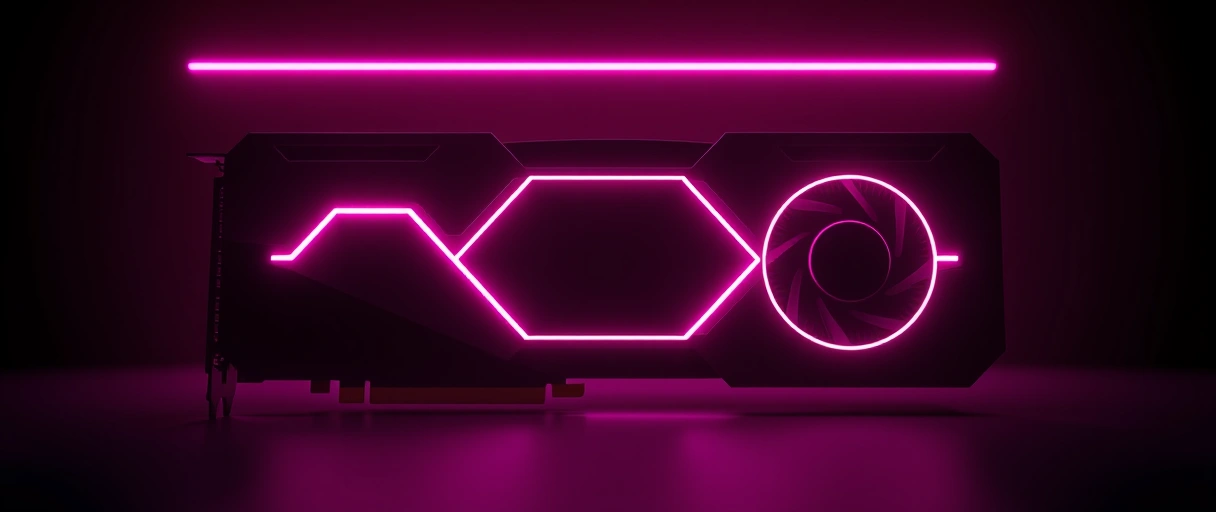
Both raise visual accuracy at a rendering cost, and path tracing is moving from a showcase feature toward the mainstream. DLSS is supported in more than 250 games as of early 2026, and path tracing now reaches 4K at high refresh on the top RTX 50-series cards, shipping in titles such as Resident Evil Requiem, 007 First Light, and PRAGMATA. Ray and path tracing change graphics through three effects:
- Accurate reflections render surfaces that mirror the actual scene rather than approximations baked into the environment.
- Realistic shadows and lighting follow physical light behavior, producing soft shadows and accurate indirect light.
- Path-traced global illumination simulates full light bounce, the most demanding form, used in titles that support full ray tracing.
Ray tracing carries a high rendering cost, which AI upscaling offsets so current graphics cards sustain playable frame rates with advanced lighting on. This is also why the game engine matters: Unreal Engine 5, with Nanite geometry and Lumen global illumination, has made software-based real-time global illumination widely available, raising the baseline for how games look.
How Are Handheld Gaming PCs and SteamOS Changing the Platform?
Handheld gaming PCs are changing the platform by running full PC libraries on portable hardware, and the bigger 2026 shift is Valve opening SteamOS to other makers. A handheld gaming PC integrates a processor, graphics, and display into a portable unit that runs the same games as a desktop.
These devices extend where PC gaming happens, and the operating system is now a real point of difference. Handheld gaming PCs change the platform through three shifts:
- SteamOS devices run PC games on the Linux-based SteamOS with strong handheld optimization, led by the Valve Steam Deck and now the Legion Go 2 in a SteamOS edition.
- Windows handhelds such as the ROG Xbox Ally X run Windows and reach the full range of PC game stores, including kernel anti-cheat titles.
- Valve’s wider ecosystem extends beyond handhelds, with SteamOS now licensed to other makers and new Steam Machine and Steam Frame hardware on the way.
Handheld gaming PCs run the same games as desktop systems, which distinguishes them from fixed-library handheld consoles. Their portability pairs with cloud streaming and cross-platform play, and immersive headsets such as the Steam Frame connect to the trend covered in the explanation of VR gaming.
How Will Cloud Gaming Affect the Future of PC Gaming?
Cloud gaming affects the future of PC gaming by running games on remote servers and streaming the video to a player’s device, which lets lower-powered hardware play demanding games without a local graphics card. The rendering happens in a data center and the local device handles input and display only.
Services such as Nvidia GeForce Now and Xbox Cloud Gaming deliver this, and the technology has moved from experiment to a serious part of the industry, with the market projected to reach about $20.3 billion by 2027. Cloud gaming affects PC gaming through three changes:
- Remote rendering performs the graphics work on a server, removing the need for a powerful local graphics card and now running on Blackwell-class RTX 5080 cloud servers.
- Device flexibility lets laptops, handhelds, and low-end PCs play demanding titles by streaming rather than rendering locally.
- Network dependence ties performance to connection speed and latency, since the rendered video must travel from server to player.
Cloud gaming depends on connection latency, since the round trip between input and streamed frame adds delay a local PC does not have. The services, requirements, and trade-offs are detailed in the explanation of cloud gaming services, which complements rather than replaces local PC hardware.
Can ARM Chips Run PC Games?
ARM chips can increasingly run PC games through emulation, and the gap to x86 is closing, though anti-cheat remains the main barrier. Windows on ARM runs on Qualcomm Snapdragon processors and uses the Prism layer to translate x86 games on the fly.
This matters because ARM brings strong battery life and efficiency to laptops and handhelds, and 2026 is the first year the gaming story looks credible. The Windows-on-ARM gaming situation works through three factors:
- Emulation has matured: Qualcomm states that around 90 percent of top Windows games run on Snapdragon X2 laptops, expected in the first half of 2026, with Prism and AVX2 emulation improvements.
- Anti-cheat is the holdout: kernel-level anti-cheat sits close to the operating system and resists translation, though support for titles such as Fortnite and engines such as BattlEye has improved.
- It is better, not solved: a Snapdragon Control Panel and per-game tweaks help, but native ARM builds and broader anti-cheat coverage are still needed.
The practical takeaway is that an ARM laptop is now a plausible gaming device for many titles, where a year earlier it was not. It sits alongside x86 desktops and handhelds rather than replacing them.
What Does the Future of PC Gaming Mean for Buyers?
For buyers, the trends mean upscaling support matters as much as raw power, prices are rising, and the right device depends on where you play. A few practical points follow from the technology direction:
- Treat AI upscaling as a core feature. A card’s DLSS, FSR, or XeSS support and its frame-generation tier now affect real-world frame rates as much as native horsepower does.
- Budget for higher prices. Graphics card prices have trended upward, with some recent cards launching near $600 and retail prices climbing further, so factor cost into timing.
- Size VRAM for modern engines. Unreal Engine 5 titles are demanding, and 16 GB of VRAM is a sensible target for higher settings and longevity.
- Match the device to where you play. A desktop for maximum settings, a SteamOS or Windows handheld for portability, or cloud streaming when local hardware falls short.
- Check ARM compatibility before relying on it. If you want a Snapdragon laptop for gaming, confirm your specific titles run, especially anything with kernel anti-cheat.
The single most useful habit is to read benchmarks with upscaling enabled, since that reflects how most people actually play. The full hardware picture is covered in the PC gaming guide.
Last Thoughts on the Future of PC Gaming
The future of PC gaming is shaped by expanding technologies grounded in current hardware and software: AI upscaling and frame generation, neural rendering, path tracing going mainstream, handheld gaming PCs and the SteamOS push, cloud gaming, Windows on ARM, and rising graphics card capability. The defining shift is that a trained model now produces a growing share of each frame, so progress comes from better AI as much as from faster silicon. These trends extend products already shipping from Nvidia, AMD, Intel, Valve, Qualcomm, and Microsoft, describing a trajectory rather than a fixed prediction.
For most players the practical effect is more performance from the same hardware, more places to play, and a stronger reason to weigh upscaling support and price when buying. The hub on the PC gaming guide connects these trends to the wider set of components and concepts behind them.
Key Takeaways:
- The future of PC gaming is a set of expanding trends grounded in current technology, not speculation.
- AI rendering is the defining shift: with Multi Frame Generation, more frames are generated by AI than traditionally rendered.
- Path tracing is going mainstream, reaching 4K at high refresh on top cards because AI upscaling offsets its cost.
- Handheld PCs and Valve’s SteamOS push extend where PC gaming happens, alongside Windows handhelds.
- Windows on ARM can now run around 90 percent of top games via emulation, with anti-cheat the main holdout.
- Cloud gaming is a growing companion to local hardware, and rising GPU prices make upscaling support a key buying factor.
Frequently Asked Questions (FAQs)
What is the future of PC gaming?
The future of PC gaming is the direction the platform is moving, shaped by expanding technologies such as AI upscaling and frame generation, neural rendering, path tracing, cloud gaming, handheld gaming PCs, virtual reality, Windows on ARM, and rising graphics card capability. Each trend builds on hardware and software shipping today rather than on speculation.
Is AI replacing traditional rendering in games?
AI is not replacing traditional rendering, but it is taking over a growing share of it. With DLSS 4.5 Multi Frame Generation, a GPU can render one frame and have the AI model generate several more between rendered frames, so most displayed frames are generated rather than fully rendered. Nvidia described neural rendering as the future of its gaming GPUs at CES 2026.
Will ray tracing and path tracing become standard?
They are moving in that direction. DLSS is supported in more than 250 games as of early 2026, and titles such as Resident Evil Requiem and 007 First Light ship with path tracing. AI upscaling and frame generation offset the heavy cost of path tracing, which is what makes it playable on current graphics cards.
Are handheld gaming PCs the future of the platform?
Handheld gaming PCs are one major trend, not a replacement for desktops. Devices such as the Steam Deck, ROG Xbox Ally X, and Legion Go 2 run full PC libraries portably, and Valve now licenses SteamOS to other makers and is adding the Steam Machine and Steam Frame. They extend where PC gaming happens.
Can ARM chips run PC games?
Increasingly, yes. Windows on ARM uses the Prism emulation layer to run x86 games on Snapdragon chips, and Qualcomm states that around 90 percent of top Windows games run on Snapdragon X2 laptops. Kernel-level anti-cheat is the main remaining barrier, and progress on titles such as Fortnite has improved but not fully solved it.
Is cloud gaming going to replace gaming PCs?
No. Cloud gaming streams games from remote servers so weaker devices can play demanding titles, but it depends on connection latency and bandwidth. Services such as GeForce Now and Xbox Cloud Gaming are treated as companions to local hardware rather than replacements, even as the market continues to grow.
About the author

Nizam Ud DeenFounder and Tech Blogger
Muhammad Nizam Ud Deen Usman is the founder of theCoreiTech and the author of The Local SEO Cosmos. He has worked in search since 2014 as an SEO consultant for eCommerce stores and local businesses, specialising in eCommerce SEO, local SEO and technical SEO, and runs SEO Academy and the SEO Community from Multan, Pakistan. He also founded ORM Digital Solutions, a digital agency serving medium and large businesses, and holds a degree from the University of Education, Lahore (Multan Campus). Plerdy lists him among its Best 20+ SEO Experts in Pakistan. Nizam started theCoreiTech in 2012 to make computers easier to understand and use for everyone. More of his work is at nizamuddeen.com.
