
A gaming PC is a customizable computer with a dedicated graphics card and upgradeable parts, while a console is a sealed device with fixed hardware sold by Sony, Microsoft, or Nintendo. A gaming PC reaches higher frame rates and resolutions, runs the largest game library across multiple stores, plays online for free, and accepts upgrades and mods. A console costs less upfront, ships ready to play, and runs every game on the same optimized hardware. The right platform depends on which factor matters most: a PC trades a higher entry price and setup effort for flexibility and power, while a console trades flexibility for a lower price and simplicity.
What Are a Gaming PC and a Console?
A gaming PC is a customizable computer with a dedicated graphics card and upgradeable parts, while a console is a sealed device with fixed hardware optimized for a single generation of games. A gaming PC runs Windows and a wide software library, whereas a console runs a closed operating system tuned for its exact hardware. The platforms differ in these core traits:
- A gaming PC uses interchangeable parts, letting the owner choose and later upgrade the GPU, CPU, RAM, and storage.
- A console uses fixed hardware, so every unit of a generation runs identical components developers optimize for.
- A gaming PC runs an open platform with multiple storefronts, free online play, and modding support.
- A console runs a closed platform with one storefront and a controlled, plug-and-play experience.
The current console generation is the Sony PlayStation 5 and the higher-end PS5 Pro, the Microsoft Xbox Series X and the smaller Series S, and the Nintendo Switch 2, which launched in June 2025. A gaming PC’s components and their roles appear in the breakdown of what makes a gaming PC. The same PC parts fit a laptop or a desktop, a choice covered in the gaming laptop versus desktop comparison.
How Do Performance and Graphics Compare?
A gaming PC reaches higher frame rates and resolutions than a console because its graphics card can exceed console hardware and be upgraded, while a console runs at fixed settings optimized for its sealed components. The Xbox Series X and PS5 reach 4K at up to 120 frames per second in supported titles, and the PS5 Pro adds AI upscaling for steadier 4K, while a high-end gaming PC goes well beyond. The performance differences are listed below:

- A gaming PC’s frame rate scales with its GPU, reaching 144 or 240 frames per second on a high-refresh monitor, and over 240 in many esports titles.
- A console renders at fixed performance modes, typically a quality mode and a 60 or 120 frames-per-second mode, capped by its sealed hardware.
- A gaming PC adjusts graphics settings per game, raising or lowering detail to suit the hardware and display.
- A console applies developer-set settings, which removes configuration but limits the ceiling to the fixed hardware.
The graphics card sets the performance ceiling on a gaming PC, with model tiers ranked in the best GPUs for gaming overview. In hardware terms, the PS5 Pro lands near a mid-range PC graphics card, so reaching well past it takes a higher GPU tier. Driving frame rates above 60 on either platform also requires a display that refreshes faster, which the overview of what a gaming monitor is explains.
How Does Upfront Cost Compare to Long-Term Cost?
A console costs less upfront than a comparable gaming PC, while a gaming PC can offset its higher entry price over time through free online play, cheaper games, and component upgrades. In 2026 a base PS5 and Xbox Series X both sit near 649 dollars, the Series S near 329 dollars, and the PS5 Pro at 899 dollars, while components for a PC that matches a base console run about 700 to 800 dollars. The cost factors are listed below:
- A console has a lower or comparable upfront price, sold as a single sealed unit ready to play out of the box.
- A gaming PC has a higher upfront price that rises with the graphics card tier and component quality.
- A gaming PC offers free online play and cheaper games, since new PC releases trend well below the 70-dollar console standard and go on sale often.
- A gaming PC defers replacement through upgrades, swapping the GPU instead of buying a whole new system each generation.
The pattern is that a console is a lower upfront cost with a steady stream of smaller charges, while a gaming PC is a larger one-time outlay that recurring savings slowly repay. Console and component prices also vary by region, retailer, and generation, so the comparison rests on general ranges rather than fixed figures. Building a PC at a controlled price is the subject of the budget gaming PC build guide, and whether the platform earns its cost overall is weighed in is PC gaming worth it.
How Do the Game Libraries and Exclusives Compare?
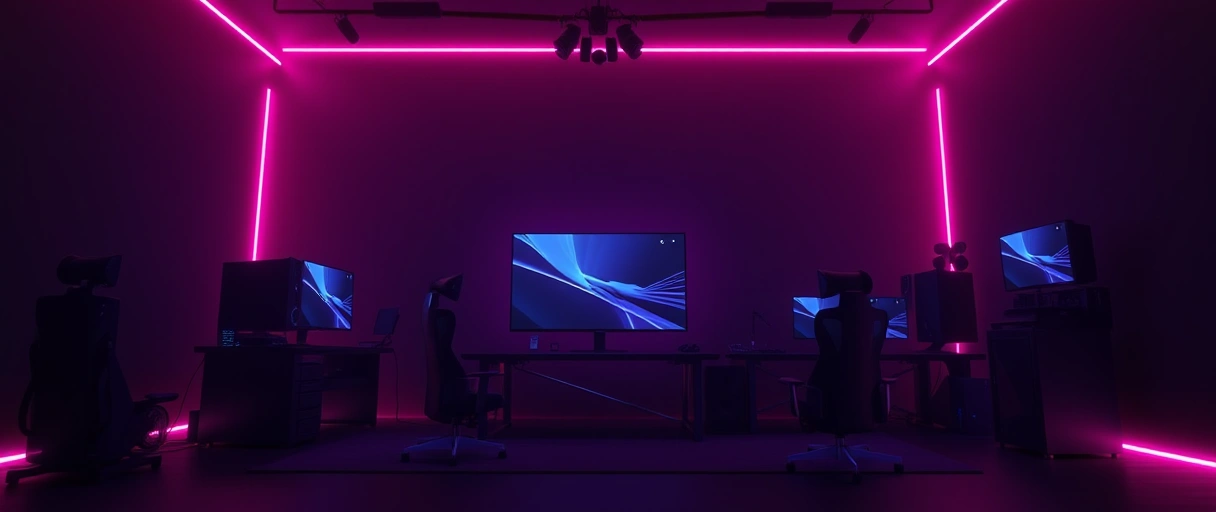
The gaming PC library is the largest across multiple storefronts, while consoles hold first-party exclusives that drive platform choice for specific franchises. A gaming PC runs games from Steam, the Epic Games Store, GOG, and others, while each console maker reserves first-party titles for its hardware. The library differences are listed below:
- A gaming PC accesses multiple storefronts, combining the largest catalog of current and decades-old games.
- A console holds first-party exclusives, such as Sony, Nintendo, and select Microsoft franchises.
- A gaming PC runs backward-compatible and legacy software without the generational limits a console imposes.
- A console guarantees compatibility, since every game targets the same fixed hardware.
The exclusivity gap is narrowing but has not closed. Microsoft now releases its first-party games on PC the same day through Play Anywhere, while Sony brings selected PlayStation titles to PC after a delay and kept some of its 2025 first-party games console-only. A buyer committed to a specific exclusive franchise should confirm where it is available, regardless of the broader hardware differences of a gaming PC.

How Does Upgradeability Differ?
A gaming PC upgrades component by component, while a console’s fixed hardware stays unchanged until the next generation, so only the PC extends its performance over time. A gaming PC owner replaces the GPU, adds RAM, or swaps storage, whereas a console offers only storage expansion. The upgradeability differences are listed below:
- A gaming PC replaces the graphics card, the single largest performance upgrade, without replacing the system.
- A gaming PC adds RAM and storage, extending capacity as games grow larger.
- A console allows storage expansion only, through an approved drive, with the GPU and CPU fixed.
- A gaming PC defers full replacement, since staged upgrades keep performance current across years.
Replacing the graphics card is the most impactful PC upgrade, with current options ranked in the best GPUs for gaming overview and the processor pairing in the best CPUs for gaming guide. Choosing a system you can open and upgrade later is also part of the prebuilt versus custom gaming PC decision.
How Do Online Play Costs Compare?
Online multiplayer is free on a gaming PC, while consoles require a paid subscription for most online play, which adds a recurring cost to the console platform. A gaming PC connects to multiplayer servers without a platform fee, whereas Sony, Microsoft, and Nintendo charge for their online services. The online cost differences are listed below:
- A gaming PC plays online for free, with no platform subscription required for multiplayer.
- A console requires a paid online subscription for most multiplayer titles, billed monthly or yearly.
- Console subscriptions bundle extras, such as monthly free games and cloud saves, alongside online access.
- A gaming PC charges only for individual game services when a publisher adds an optional subscription.
Subscription prices vary by service, region, and term length, so the comparison rests on the structural difference rather than fixed amounts. Free online play and cheaper games lower the long-term cost of a gaming PC, partly offsetting the higher upfront price set out earlier.
How Does Mod Support Differ Between Platforms?
A gaming PC supports extensive game mods through an open file system, while consoles allow only limited, publisher-approved mods on select titles. A gaming PC lets players install community-made modifications that alter graphics, content, and mechanics, whereas a console’s closed platform restricts modification. The mod-support differences are listed below:
- A gaming PC runs community mods from sites and workshops that add content, fix bugs, and enhance graphics.
- A console limits mods to approved content on specific games, curated by the publisher and platform holder.
- A gaming PC allows custom configuration files that adjust settings beyond a game’s in-menu options.
- A console enforces a fixed software environment, which preserves stability but blocks deep modification.
Mod support extends a game’s lifespan and customization on a gaming PC, a flexibility that follows from the open platform described earlier. The same openness underlies the storefront variety, cheaper games, and free online play covered above, distinguishing the gaming PC from the closed console environment.
Gaming PC vs Console Comparison Table
The table compares a gaming PC and a current console across upfront cost, performance, library, game prices, upgradeability, online cost, mod support, and setup effort:
| Factor | Gaming PC | Console |
|---|---|---|
| Upfront cost | Higher, scales with GPU tier (about $700 and up to match a base console) | Lower, fixed price (about $329 to $899) |
| Performance | Higher, up to 144+ fps and native 4K; over 240 fps in esports | Fixed modes, 4K up to 120 fps on Series X and PS5 |
| Graphics settings | Adjustable per game | Developer-set quality and performance modes |
| Game library | Largest, multiple storefronts plus decades of back catalog | Curated, with first-party exclusives |
| Game prices | Lower, frequent sales (median Steam launch about $16) | Higher, $70 standard for new releases |
| Upgradeability | Full, component by component | Storage expansion only |
| Online play cost | Free | Paid subscription for most multiplayer |
| Mod support | Extensive | Limited, approved only |
| Setup effort | Higher, configuration needed | Low, plug and play |
Last Thoughts on Gaming PC vs Console
Gaming PC versus console resolves to a tradeoff between flexibility and simplicity. A gaming PC delivers higher frame rates, the largest game library, cheaper games, full upgradeability, free online play, and extensive mods, at a higher upfront price and with more setup effort. A console delivers a lower entry price, optimized fixed hardware, and a plug-and-play experience, at the cost of upgradeability, online subscription fees, and mod support. With base consoles and a matching PC now landing at similar prices, the long-term factors of game cost, free online play, and upgrades carry more of the decision than they once did.
The right choice follows from which factor a buyer values most. Readers can continue with the question of whether PC gaming is worth it, the gaming laptop versus desktop comparison, the prebuilt versus custom gaming PC guide, or the PC gaming guide hub.
Key Takeaways:
- A gaming PC reaches higher frame rates and resolutions and adjusts settings per game, while a console runs fixed, optimized modes.
- Base consoles and a matching PC both land near 649 to 800 dollars in 2026, so the upfront gap has narrowed at the entry level.
- A gaming PC has the largest library and cheaper games, while consoles hold first-party exclusives.
- A gaming PC upgrades component by component, while a console’s hardware stays fixed until the next generation.
- Online play is free on a gaming PC but requires a paid subscription on every console.
- A gaming PC supports extensive mods, while consoles allow only approved modifications.
Frequently Asked Questions (FAQs)
Is a gaming PC better than a console?
A gaming PC offers higher frame rates, upgradeability, free online play, cheaper games, and mods, while a console offers a lower upfront price and fixed, optimized hardware. The better platform depends on which factor matters most to the buyer.
How much does a gaming PC cost compared to a PS5 in 2026?
A base PS5 and Xbox Series X both sit near 649 dollars after recent memory-driven price rises, while components for a PC that matches them run about 700 to 800 dollars. Matching the 899-dollar PS5 Pro at 4K with ray tracing generally needs a PC around 1,000 dollars or more.
Can a console match a gaming PC’s performance?
The Xbox Series X and PS5 reach 4K at up to 120 frames per second in supported titles, and the PS5 Pro adds AI upscaling for steadier 4K. A high-end gaming PC still goes further, exceeding 240 frames per second in esports, because its graphics card can be far more powerful and later upgraded.
Are games cheaper on PC than on console?
Yes. New console releases hold a 70-dollar standard, while the median launch price of the top new Steam games fell to about 16 dollars in late 2025, and frequent sales and third-party key sellers cut prices further. Lower game prices help offset a PC’s higher upfront cost over time.
Do you have to pay for online play on PC?
Online multiplayer is free on a gaming PC, with no platform subscription required. Sony, Microsoft, and Nintendo each charge a recurring subscription for most console multiplayer, though those services bundle extras such as monthly games and cloud saves.
Are PlayStation and Xbox games still console exclusives?
The gap is narrowing but has not closed. Microsoft now releases its first-party games on PC through Play Anywhere, while Sony brings selected titles to PC after a delay and kept some 2025 first-party games console-only. A buyer set on a specific exclusive should confirm where it is available before choosing.
About the author

Nizam Ud DeenFounder and Tech Blogger
Muhammad Nizam Ud Deen Usman is the founder of theCoreiTech and the author of The Local SEO Cosmos. He has worked in search since 2014 as an SEO consultant for eCommerce stores and local businesses, specialising in eCommerce SEO, local SEO and technical SEO, and runs SEO Academy and the SEO Community from Multan, Pakistan. He also founded ORM Digital Solutions, a digital agency serving medium and large businesses, and holds a degree from the University of Education, Lahore (Multan Campus). Plerdy lists him among its Best 20+ SEO Experts in Pakistan. Nizam started theCoreiTech in 2012 to make computers easier to understand and use for everyone. More of his work is at nizamuddeen.com.
