
A game engine is a software framework that bundles reusable systems – rendering, physics, audio, input, scripting, an asset pipeline, and a scene editor – so a team builds a video game on a tested foundation instead of coding every system from scratch. The engine is the reusable toolset; the game is the specific art, levels, and rules built on top of it, which is why one engine ships many different titles. Unreal Engine 5, Unity 6, and Godot 4 power most commercial and independent games in 2026.
What Is a Game Engine?
A game engine is a software framework that combines a rendering system, a physics engine, an audio system, an input system, a scripting layer, an asset pipeline, and an editor into one toolset for building video games:
- Runtime systems render graphics, simulate physics, play audio, and process input every frame while the game runs.
- Development tools include a visual scene editor, an asset pipeline, and a scripting interface for building levels and behavior.
- Deployment support exports one project to Windows, consoles, mobile, and the web without rewriting the game.
An engine differs from a game by being the reusable framework, not a finished title, so one engine builds many games. The engine sits between the hardware and the gameplay code and ultimately sends draw commands to the graphics processor, a process the explanation of how GPUs work details at the hardware level.
What Are the Core Systems of a Game Engine?
The core systems are rendering, physics, audio, input, scripting, and the asset pipeline, coordinated by a game loop that runs every frame:
Rendering
Physics
Audio
Input
Scripting
Asset pipeline
The game loop ties these together: it processes input, updates physics and logic, then renders a frame, repeating 30 to 144 times per second depending on the target frame rate. The rendering system sends geometry and shader instructions to the graphics card through a graphics API such as Direct3D or Vulkan, and the scripting layer keeps gameplay code separate from the compiled engine so designers adjust behavior without a rebuild.
What Are the Major Game Engines in 2026?
The major engines are Unreal Engine 5, Unity 6, Godot 4, GameMaker, and CryEngine, alongside proprietary engines large studios build in-house. Each targets a different project size, language, and license:
Unreal Engine 5
Unity 6
Godot 4
GameMaker
CryEngine
Unity leads in total project count, Unreal leads in visual fidelity, and Godot leads in developer trust and licensing freedom. Proprietary engines such as Electronic Arts’ Frostbite, Capcom’s RE Engine, and Guerrilla’s Decima give a studio full control at the cost of an internal engine team. A finished game built in any engine ships through a platform client known as a game launcher that installs and runs the title.
What Is the Difference Between 2D and 3D Game Engines?
A 2D engine renders flat sprites on a two-axis plane, while a 3D engine renders meshes in three-dimensional space with depth, lighting, and a movable camera:
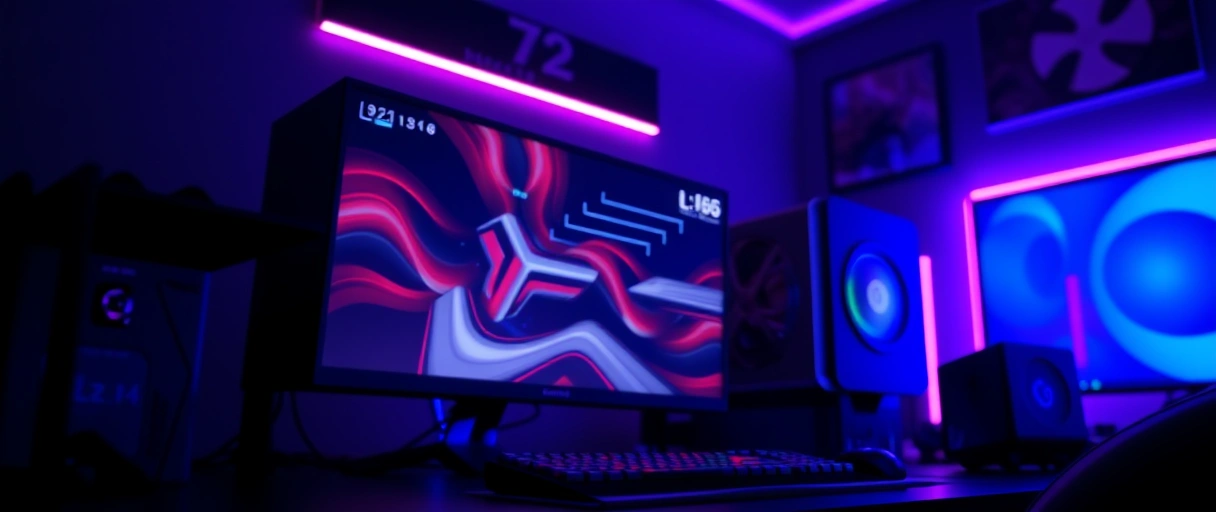
- 2D engines render sprites and tilemaps on an X and Y plane with orthographic projection, simpler collision shapes, and lower hardware demand.
- 3D engines render polygonal meshes in X, Y, and Z with perspective cameras, 3D lighting across surface normals, and depth sorting.
- Hybrid engines such as Unity, Unreal, and Godot support both 2D and 3D in one project, switching rendering mode per scene.
Why Do Studios License or Build Game Engines?
Studios license an existing engine to save time and cost, or build a proprietary engine for full control over performance and features for a specific game:



- Licensing an engine delivers a tested renderer, physics, and tools immediately, cutting the team size and time a new title needs.
- Building an engine gives full control over rendering and optimization, tailored to one genre or hardware target – at the cost of in-house maintenance.
- Hybrid approaches license a base engine such as Unreal, then extend its source code to fit project needs.
Licensing terms drive the decision as much as the technology does. The royalty and subscription models below show why a small studio usually licenses and a large studio sometimes builds.
Unreal Engine 5
Unity 6
Godot 4
Proprietary (Frostbite, RE Engine)
How Does a Game Engine Use the GPU?
A game engine uses the GPU by sending geometry, textures, and shader programs to the graphics card through a graphics API, which executes the rendering work in parallel:

- Scene preparation runs on the CPU: the engine culls hidden objects, sorts geometry, and assembles the data for the frame.
- Draw calls pass geometry and material data to the GPU through Direct3D, Vulkan, Metal, or OpenGL, instructing it what to render.
- Shader execution runs vertex and pixel shaders on the GPU cores, computing positions, lighting, and final pixel colors in parallel.
The engine talks to the GPU through a graphics API rather than the hardware directly, so the explanation of Microsoft DirectX covers how Direct3D exposes the graphics card to the engine. A card with more cores and memory bandwidth renders more complex scenes per frame, which the guide to the best GPUs for gaming measures across price tiers. The engine’s efficiency determines how many draw calls and how much detail the hardware sustains at a target frame rate.
Game Engines Comparison Table
The table compares the major engines across primary language, license model, dimension support, and typical use:
| Engine | Language | License | Dimension | Typical Use |
|---|---|---|---|---|
| Unreal Engine | C++ and Blueprint | Royalty after revenue threshold | 2D and 3D | High-fidelity 3D, console titles |
| Unity | C# | Tiered subscription | 2D and 3D | Mobile, indie, cross-platform |
| Godot | GDScript and C# | Free, MIT (no royalty) | 2D and 3D | 2D games, smaller 3D projects |
| CryEngine | C++ and Lua | Royalty model | 3D | Photorealistic 3D rendering |
| Frostbite | Proprietary | Internal to Electronic Arts | 3D | Large in-house EA titles |
Last Thoughts on Game Engines
A game engine turns reusable rendering, physics, audio, and scripting systems into one framework that studios build games on, replacing the need to code every system per project. Unreal Engine, Unity, and Godot power most titles, the game loop ties the core systems together each frame, and the engine drives the graphics hardware through a graphics API.
The choice to license or build an engine weighs speed against control. Readers can continue with the explanation of DirectX, the overview of how GPUs work, or the software applications guide that links the full software cluster.
Key Takeaways:
- A game engine is a software framework that bundles rendering, physics, audio, scripting, and tools for building games.
- Six core systems run the engine: rendering, physics, audio, input, scripting, and the asset pipeline, tied together by the game loop.
- Unreal, Unity, and Godot lead the market, alongside CryEngine and proprietary engines such as Frostbite and RE Engine.
- Modern engines support both 2D and 3D, switching projection and physics models per scene.
- Studios license or build engines, trading development speed against control and maintenance cost.
- The engine drives the GPU through a graphics API such as Direct3D or Vulkan, issuing draw calls each frame.
Frequently Asked Questions (FAQs)
What is a game engine in simple terms?
A game engine is a software framework that provides rendering, physics, audio, scripting, and editor tools. Developers build games on top of it instead of coding every system from scratch.
What are the most popular game engines?
Unreal Engine, Unity, and Godot are the most popular. Unreal powers high-fidelity 3D titles, Unity dominates mobile and indie games, and Godot is a free open-source option for 2D and smaller 3D games.
What programming language do game engines use?
Unreal Engine uses C++ and Blueprint visual scripting. Unity uses C#. Godot uses GDScript and C#. The language affects how developers write gameplay logic on top of the engine.
Is Unity or Unreal Engine better?
Unity suits mobile and 2D projects with C# scripting, while Unreal suits high-fidelity 3D titles with C++ and Blueprint. The better choice depends on platform, art style, and team experience.
Do game engines cost money?
Godot is free under the MIT license. Unreal Engine charges a royalty after a revenue threshold. Unity uses a tiered subscription. Pricing depends on the engine and project revenue.
What is the difference between a 2D and 3D game engine?
A 2D engine renders flat sprites on an X and Y plane. A 3D engine renders meshes in three-dimensional space with depth, perspective cameras, and 3D lighting. Many engines support both.
About the author

Nizam Ud DeenFounder and Tech Blogger
Muhammad Nizam Ud Deen Usman is the founder of theCoreiTech and the author of The Local SEO Cosmos. He has worked in search since 2014 as an SEO consultant for eCommerce stores and local businesses, specialising in eCommerce SEO, local SEO and technical SEO, and runs SEO Academy and the SEO Community from Multan, Pakistan. He also founded ORM Digital Solutions, a digital agency serving medium and large businesses, and holds a degree from the University of Education, Lahore (Multan Campus). Plerdy lists him among its Best 20+ SEO Experts in Pakistan. Nizam started theCoreiTech in 2012 to make computers easier to understand and use for everyone. More of his work is at nizamuddeen.com.
